





Rohangupta
|
Consulting, Business awareness and ...
Star this Commitment
Day 32 of 46
Rohangupta commits to:
I will analyze and summarize one business case, economic event, or corporate strategy decision every day for 45 days and maintain a word/written summary.
19
11
|
My Commitment Journal
 Rohangupta
July 18, 2026, 6:15 PM
|
|
|
Today’s Business Learning – 18 July 2026 1. India Strengthens Its Semiconductor Manufacturing Ambitions The Government of India has approved an additional ₹1.28 lakh crore (approximately US$13.3 billion) under its semiconductor mission to accelerate domestic chip manufacturing. The initiative aims to reduce India’s dependence on imported semiconductors, attract global chip manufacturers, strengthen the electronics ecosystem, and position India as a key player in the global semiconductor supply chain. This investment is expected to create high-skilled jobs, boost innovation, and enhance India’s technological competitiveness. Key Learning: Semiconductors are the backbone of industries such as smartphones, electric vehicles, AI, defence, and consumer electronics. Countries investing in chip manufacturing are building long-term strategic and economic resilience. ⸻ 2. Inflation Remains a Key Focus for the RBI India’s retail inflation increased to 4.38% in June, moving above the RBI’s 4% target for the first time in over a year. The rise has been driven mainly by food and fuel prices, leading economists to closely watch the RBI’s upcoming monetary policy decisions. If inflation remains elevated, borrowing costs could stay high, impacting businesses, consumers, and investment decisions. Key Learning: Inflation directly affects interest rates, consumer spending, corporate profitability, and stock market performance. As an MBA student, understanding the relationship between inflation and monetary policy is crucial for analysing business and financial markets. ⸻ 3. Wipro’s Q1 Results Highlight the Importance of Margin Management Wipro reported nearly flat quarterly profit growth despite achieving double-digit revenue growth. The results highlight that increasing sales alone does not guarantee higher profitability. Companies must also manage operating costs, improve productivity, and maintain healthy margins to create shareholder value. Investors will continue to monitor earnings quality rather than just revenue growth. Key Learning: Revenue growth and profit growth are different. Sustainable business performance depends on efficient cost management, operational excellence, and strong margins—not just higher sales. |
|
|
Rohangupta
July 15, 2026, 6:10 PM
|
|
|
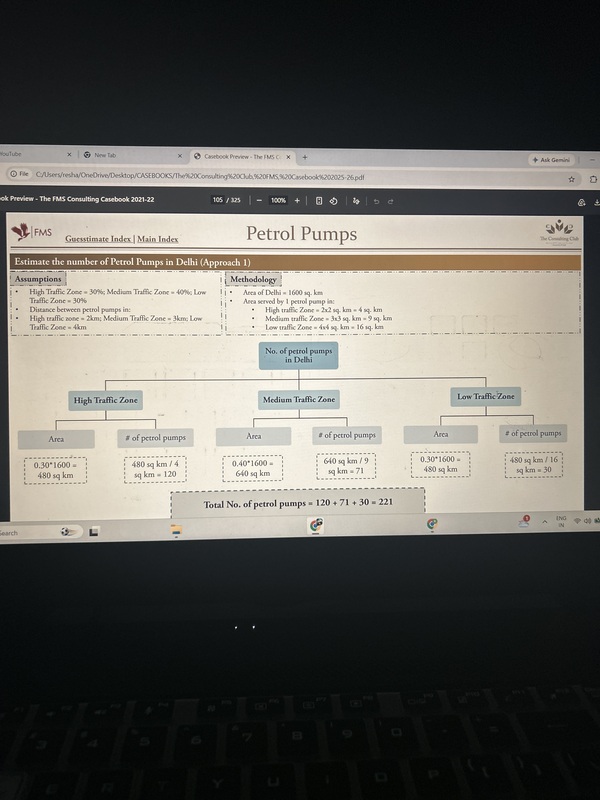
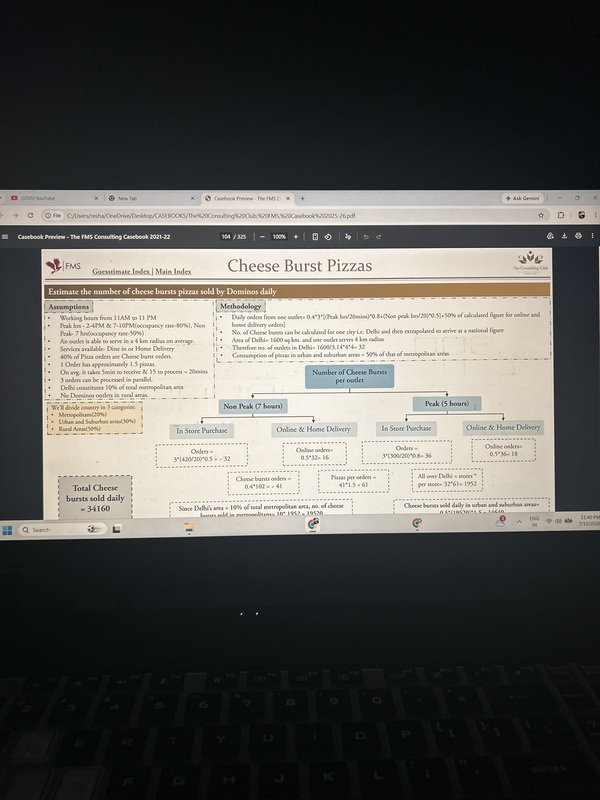
Today, I practiced two consulting guesstimates that strengthened my ability to structure ambiguous business problems using logical assumptions and MECE thinking. 1. Estimating the Number of Cheese Burst Pizzas Sold Daily by Domino’s * Broke the problem into demand per outlet and then scaled it nationally. * Segmented demand into peak vs. non-peak hours and dine-in vs. online/home delivery. * Used assumptions such as: * Working hours (11 AM–11 PM) * Order processing time and outlet capacity * Percentage of cheese burst orders * Average pizzas per order * Geographic scaling (Delhi → Metropolitan cities → Urban/Suburban → Rural) * Key Learning: In market-sizing cases, first estimate performance at a unit level (one outlet), then scale systematically using population, geography, and market penetration assumptions. Always justify every assumption instead of guessing numbers. 2. Estimating the Number of Petrol Pumps in Delhi * Used a supply-side approach by dividing Delhi into high, medium, and low traffic zones. * Estimated the area covered by one petrol pump in each traffic zone. * Calculated the number of pumps required based on coverage area and aggregated the results. * Key Learning: Infrastructure guesstimates are often easier to solve by estimating service coverage rather than customer demand. Segmenting regions based on traffic density provides a logical and defendable estimation. Overall Learning Today’s practice reinforced that strong guesstimates are less about arriving at the exact number and more about demonstrating a structured problem-solving approach. The key principles I learned are: * Break complex problems into MECE buckets. * Make realistic, clearly stated assumptions. * Use either a demand-side or supply-side approach depending on the problem. * Start with a small unit (one outlet/one service area) and scale logically. * Validate whether the final estimate is reasonable before concluding. |
|
|
|
|
|
Rohangupta
July 14, 2026, 1:44 PM
|
|
|
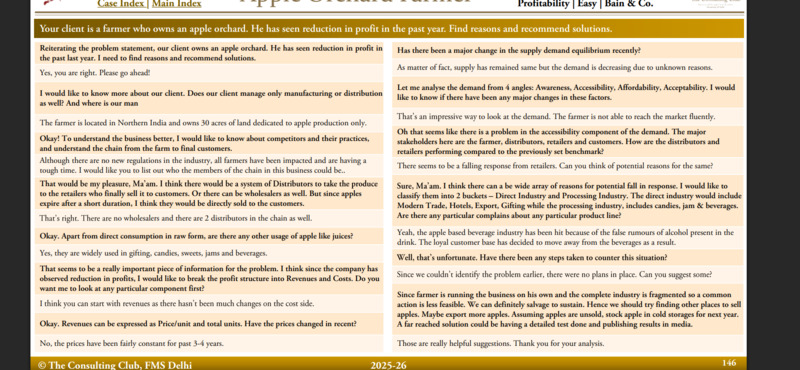
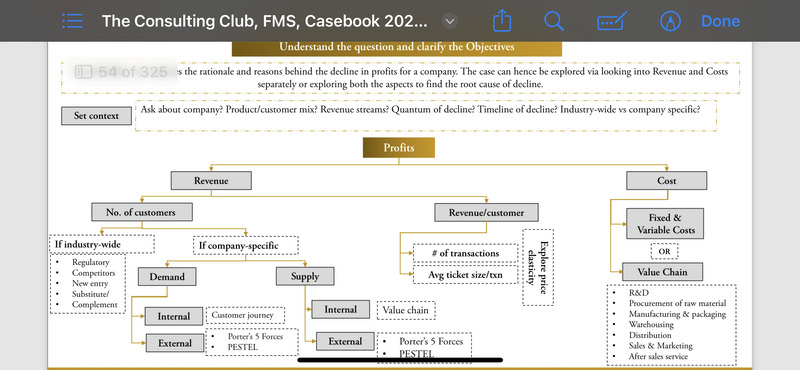
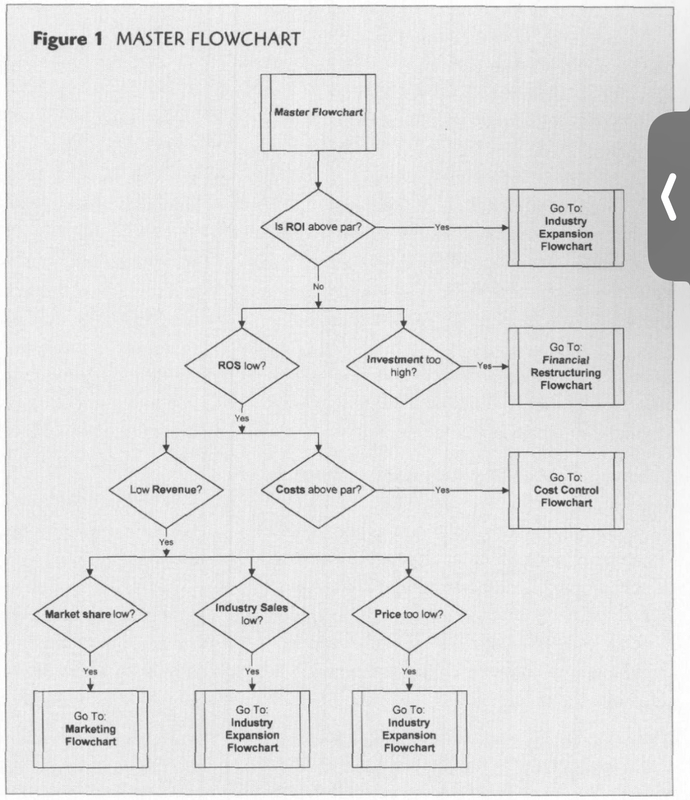
Today's Top 3 Business News (July 14, 2026) Indian Markets Slide Amid Geopolitical Tensions: The Indian stock markets witnessed a sharp decline, with the BSE Sensex dropping over 560 points and the NSE Nifty 50 sliding below 24,100. This sell-off was heavily triggered by escalating West Asia conflicts (specifically US-Iran tensions), rising crude oil prices, and continuous Foreign Institutional Investor (FII) outflows. Rupee Breaches 96 Against the US Dollar: Under pressure from surging crude oil prices—which climbed toward $85 per barrel—the Indian Rupee weakened by 48 paise to cross the 96 mark against the US Dollar for the first time since May, as the initial impact of the RBI’s foreign exchange intervention faded. WPI Inflation Spikes to 9.87%: Driven primarily by soaring food and mineral prices linked to rising global energy costs and regional supply threats, India's Wholesale Price Index (WPI) inflation jumped significantly in the latest June readings. Apple Orchard Farmer The case study follows a structured profitability framework to diagnose a profit decline for an Indian apple farmer. 1. The Client & Problem The Client: A farmer based in Northern India owning 30 acres of land dedicated solely to apple production. The Problem: The farmer has experienced a decline in profitability over the past year. 2. Diagnosis & Root Cause By breaking down the business metrics, the following factors were uncovered: Revenue vs. Cost: Costs have remained stable, pointing the issue entirely to a drop in revenues. Price vs. Volume: Unit pricing has been constant for the last 3–4 years, meaning the revenue drop is purely due to falling sales volume (declining demand). Accessibility & Retailers: While supply was unchanged, demand dropped because the farmer could not access the market fluently, driven by a declining response from retailers. The Ultimate Root Cause: The apple-based beverage industry (a major buyer of the farmer's produce) was severely hit by false rumors of alcohol content in the drinks, leading to a massive exodus of their loyal customer base. 3. Recommended Solutions To mitigate the crisis, the case concludes with both immediate and long-term remedies: Market Diversification: Explore alternative domestic markets and push for increased apple exports. Preservation: Store unsold apples in cold storage facilities to sell in the subsequent year. Damage Control: Conduct detailed, independent scientific tests on the beverages and publish the clean results in the media to debunk the false rumors and restore consumer trust. |
|
|
|
|
|
Rohangupta
July 11, 2026, 6:03 PM
|
|
|
Today’s Commitment (11 July 2026) Today, I strengthened my market-sizing and business awareness skills. Guesstimate Solved: Estimate the annual revenue generated by movie theatres in India. Approach: * Population of India ≈ 1.45 billion * Assumed 60% of the population watches at least one movie in theatres annually. * Average moviegoer watches 2 movies per year. * Estimated total tickets sold = 1.74 billion. * Assumed average ticket price = ₹180. * Estimated annual box office revenue = approximately ₹31,300 crore. Key Learning: This exercise reinforced the importance of breaking a problem into logical drivers—target customers, penetration rate, usage frequency, and average price. This structured approach can be applied to estimate the market size or revenue of almost any consumer-facing business. Business News Learned Today: 1. Indian equity markets extended their rally, with Sensex gaining around 827 points, driven by banking stocks, IT, Reliance Industries, and positive global cues. 2. TCS reported strong Q1 FY27 results with an 8.5% year-on-year increase in net profit, highlighting the resilience of the Indian IT sector despite global uncertainty. 3. Reliance Industries announced plans to expand its domestic energy business by commencing exploration in its Sohagpur coal-bed methane block, reflecting its continued focus on strengthening India’s energy ecosystem. Overall Reflection: Today’s learning improved my ability to approach ambiguous business problems using structured estimation while staying informed about major developments in financial markets, corporate performance, and strategic investments—skills that are essential for consulting and business decision-making. |
|
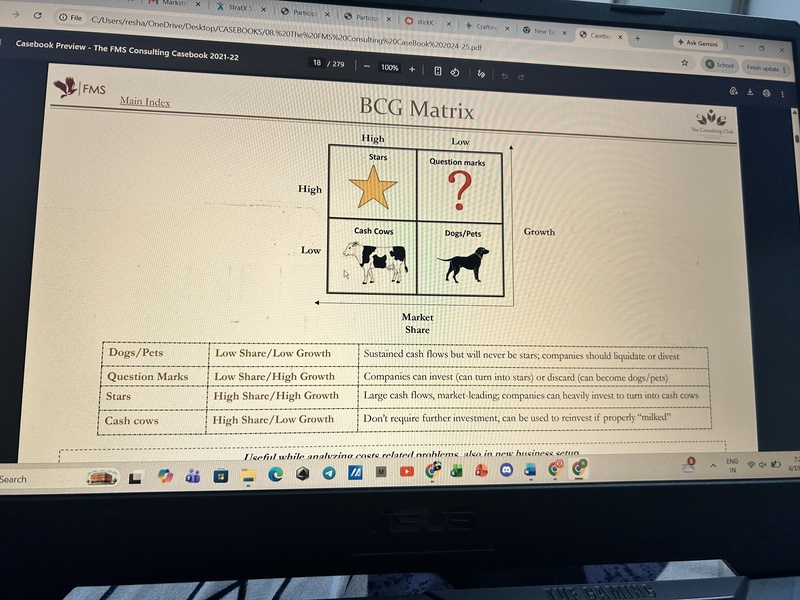
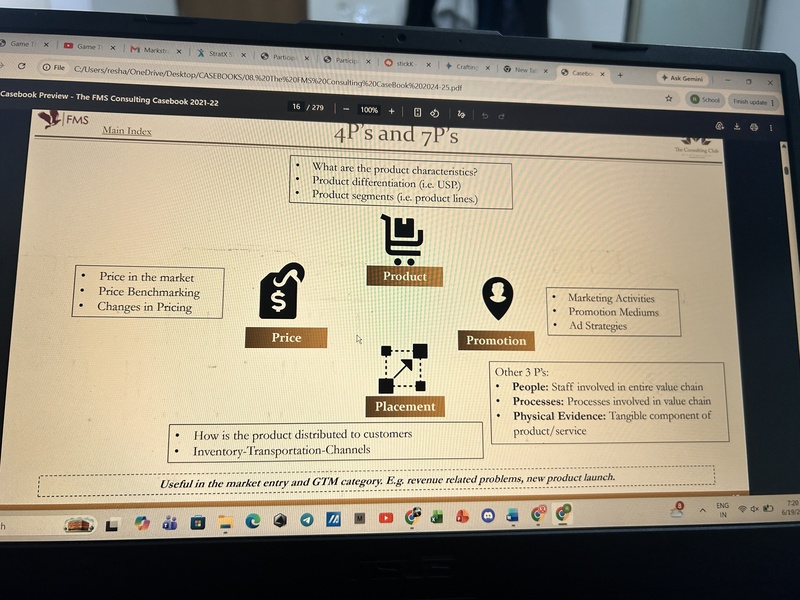
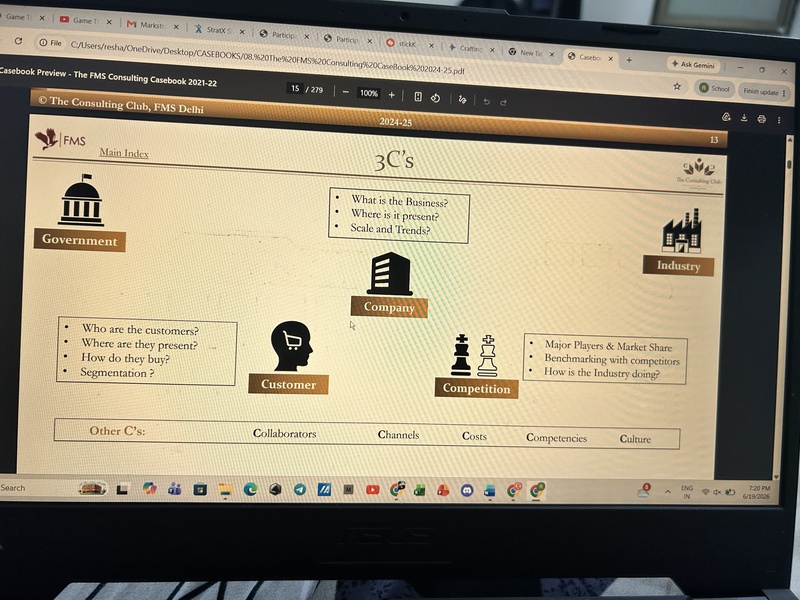
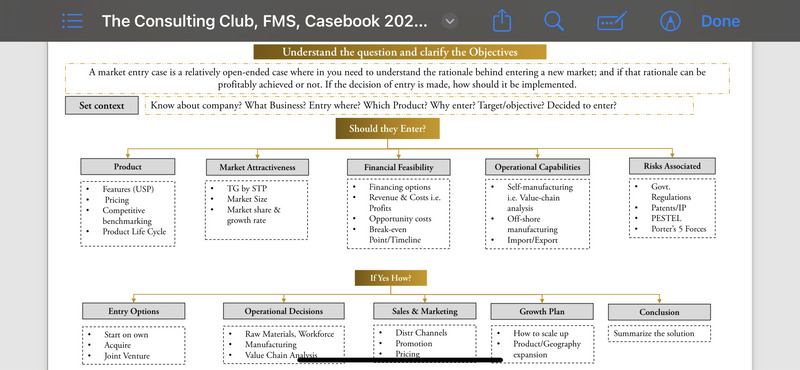
.